

Diaspora4Innovation: Bridging Albanian Science and International Research

E martë, 17 Nëntor, 2026

Diaspora4Innovation: Bridging Albanian Science and International Research

Dr Gladiola Goranci Buzhala has experienced two distinct academic realities firsthand, from her studies in Kosovo to scientific research in Germany. In her home country, she encountered limited opportunities to pursue a scientific career, whereas in Germany she found a research environment characterised by international competition, advanced technology and opportunities for specialisation. This contrast has also shaped her understanding of the importance of creating opportunities for students who want to pursue careers in science.

It is precisely this experience that makes her involvement in Diaspora4Innovation particularly meaningful. The programme is implemented by Germin with the support of the EU4Innovation programme and aims to connect the expertise of Albanian academics and professionals living abroad with universities and students in Albania and Kosovo.

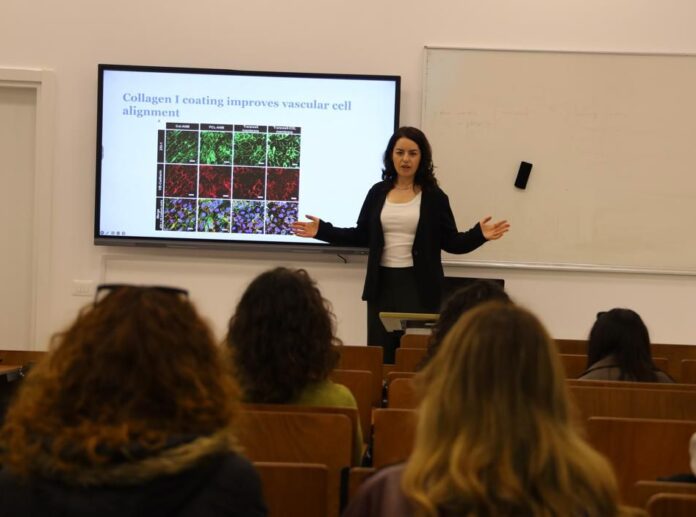
As part of the programme, Dr Gladiola Goranci Buzhala collaborated with Dr Albana Halili and students at Western Balkans University, sharing her knowledge and experience in biomedical research. Through this collaboration, students had the opportunity to gain a closer understanding of scientific research methods and the practices of international laboratories, while also laying the groundwork for further research contacts and opportunities.

In this interview, Dr Gladiola Goranci Buzhala discusses her journey from Kosovo to Germany, the challenges of building a scientific career, and her desire to create opportunities for Albanian students that she herself would have liked to have had at the beginning of her career.

Through a series of interviews, Gazeta Diaspora Shqiptare will present the profiles of Albanian academics participating in Diaspora4Innovation, a programme implemented by Germin with the support of EU4Innovation. The series will explore their professional journeys, international experiences and potential contributions to the development of education and scientific research in Albania and Kosovo.

How did your journey into biomedical sciences and scientific research begin? What drew you to this field?

From a very young age, I was an extremely curious and inquisitive girl. When it came to choosing a profession, I would always say that I wanted to do something that would allow me to help people and contribute to their recovery.

When the time came to pursue my studies, I was absolutely convinced that I would become a doctor. However, things did not go exactly as I had planned, and I was not admitted to the Faculty of Medicine. I therefore decided to enrol at the Faculty of Natural Sciences, where I initially found myself undecided between Biology and Chemistry.

In 2004, Applied Biology was a relatively new field of study. I thought I would study it for just one year and then try to get into Medicine again. But that never happened. I completed my first year with very good results and, above all, realised just how deeply the subject fascinated me. I liked the idea that biology could help me understand the mechanisms underlying diseases and that, through scientific research, I could contribute to finding new solutions.

In a way, what I had initially considered a temporary path became my professional calling. Today, after many years in biomedical research, I can say that my childhood desire to contribute to people’s health is still there. The only difference is that I pursue it not directly through clinical medicine, but through science and research.
Despite building your career abroad, you continue to maintain links with the academic communities in Albania and Kosovo. What motivates you to invest your time and expertise in your homeland?

I feel that contributing, even in a small way, to the country I come from is both a moral responsibility and a very personal desire. I believe that the diaspora does not have to remain connected to its homeland only through physical presence. It can also maintain those ties through knowledge, experience and the networks built over the years. Germin has been making this possible for many years.

For me, it is very important to exchange ideas and experiences with colleagues and professionals, and especially with young, motivated students. Sometimes, even a conversation, a piece of advice, a contact or a shared experience at the right moment can open up a new opportunity for someone to move forward.

I have had the opportunity to learn and develop in highly advanced scientific environments, and I believe it is valuable to bring some of that experience back to Kosovo and Albania. Not with the idea that I am coming from abroad to show others how things should be done, but to build bridges, foster collaboration and create opportunities for knowledge and experience to flow in both directions.

Ultimately, that is also what engagement with the diaspora means to me: not losing your connection with your country and, whenever you have the opportunity, helping ensure that others have more opportunities than we had at the beginning of our own journeys.

Through the Diaspora4Innovation programme, you collaborated with Dr Albana Halili and students at Western Balkans University. What impressed you most about this experience and the students’ response to practical research work?

I was very fortunate that the collaboration with Dr Albana Halili was so easy and natural. She also completed her studies outside Albania, so communication was very straightforward. She understands very well what scientific research involves and how much work, dedication and organisation are needed to establish and maintain functional experimental laboratories in Albania.

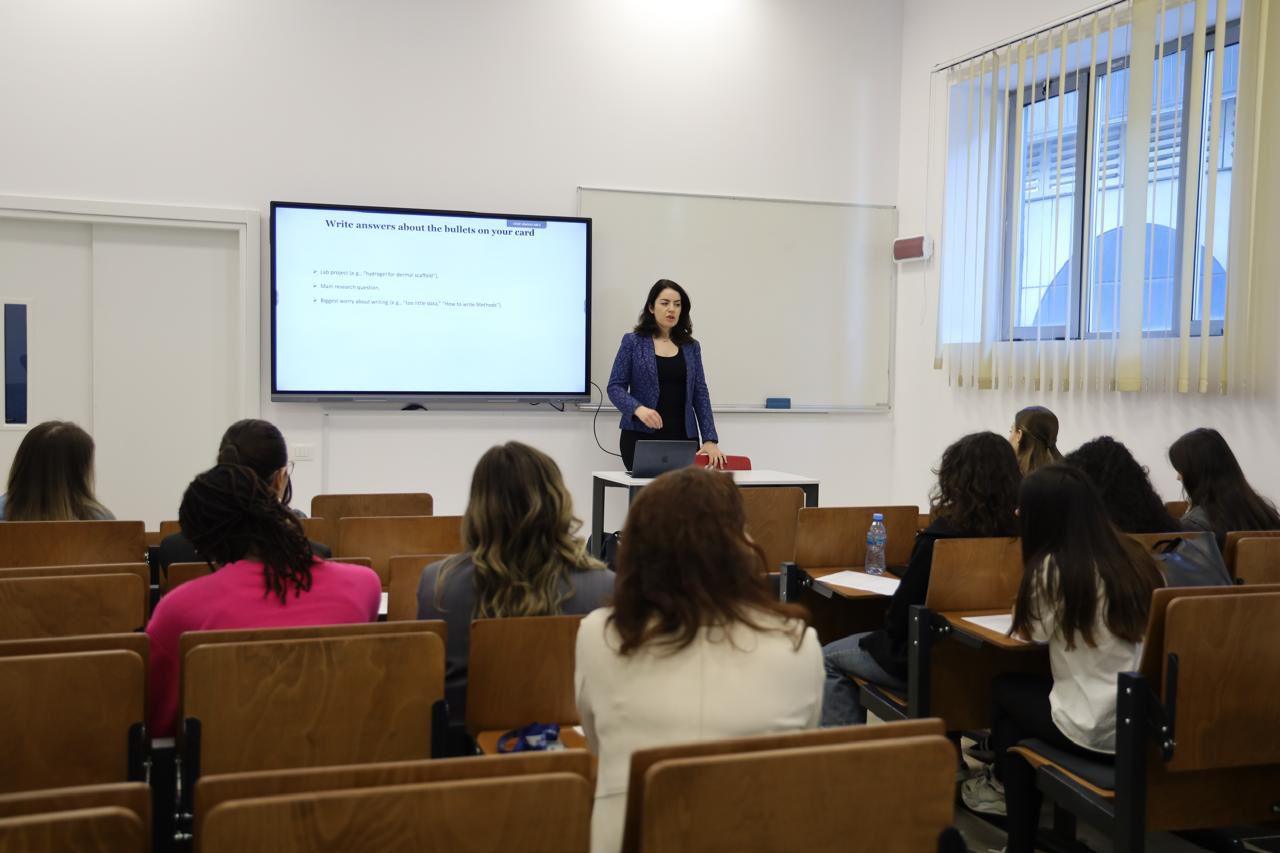
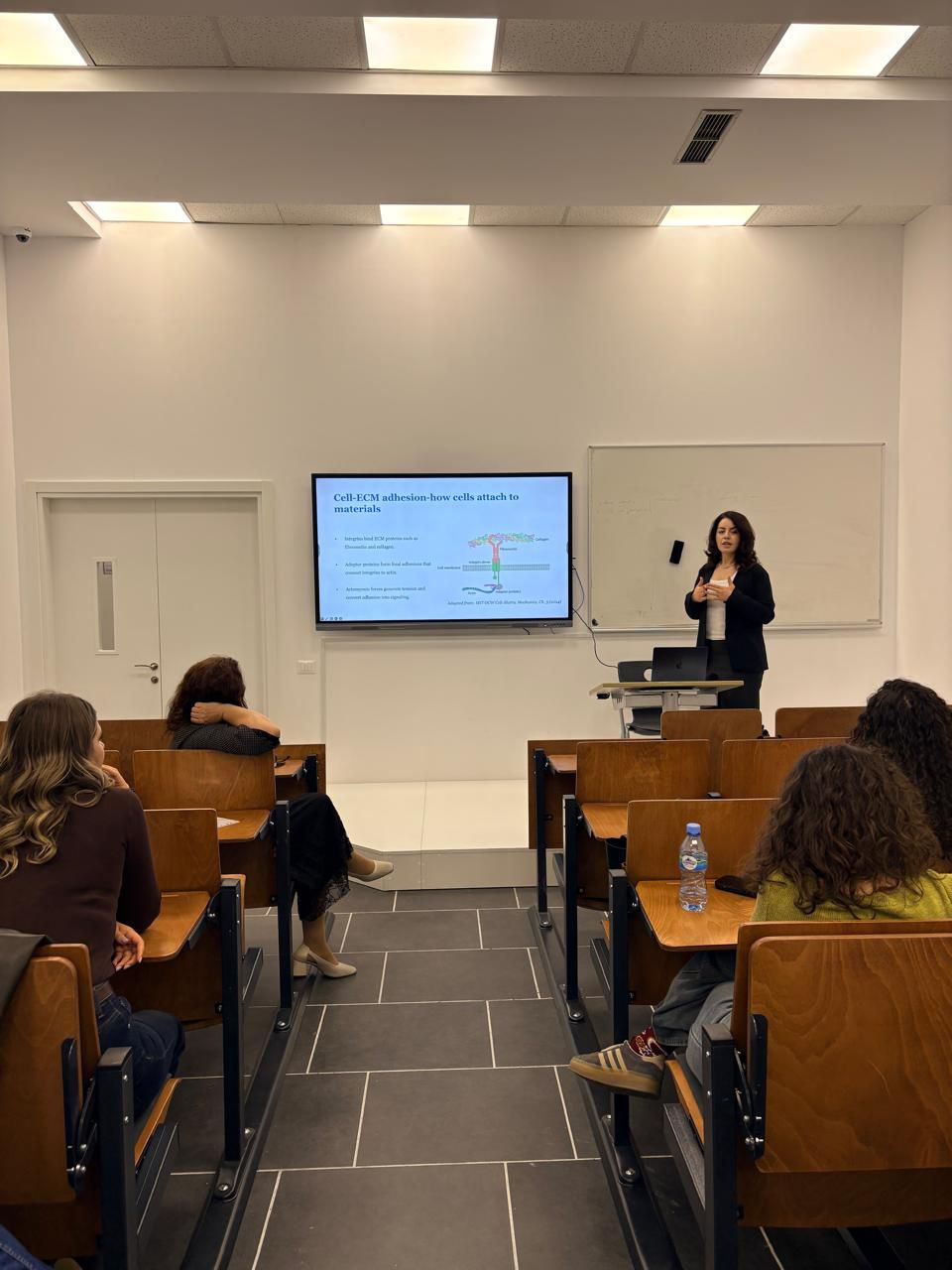
As for the students, what impressed me most was their curiosity and interest. I was very pleasantly surprised by the questions they asked, particularly about how scientific research is conducted in laboratories abroad, how projects are organised, which technologies are used and what a researcher’s day-to-day work looks like.

Many of them expressed an interest in undertaking short placements or study visits so that they could see the work in laboratories at CECAD firsthand. This made me very happy because it shows that there are students who are motivated and enthusiastic about developing their careers in science.

For me, that was perhaps the most rewarding part of the experience: seeing how a meeting or an initiative of this kind can spark even greater interest among young people and motivate them to seek out new experiences. Of course, students interested in placements or similar exchanges are always welcome to contact me.

During the project, you introduced students to methods and tools used in scientific research. Given that you completed part of your initial university education in Kosovo, how important is it for Albanian students to gain greater exposure to the practical realities of European and international research?

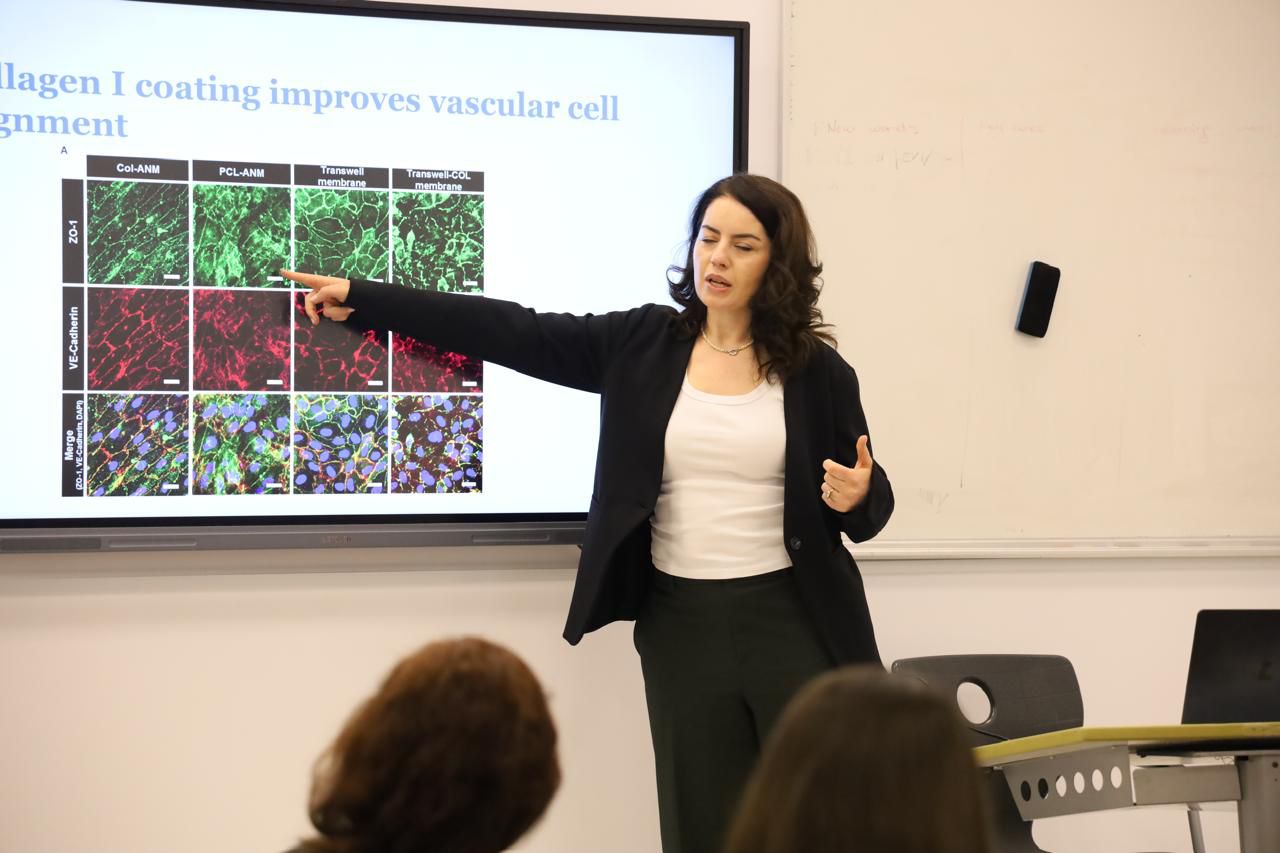
During the project, I tried to show students not only some laboratory methods but, first and foremost, how to formulate a scientific question and develop a hypothesis for a particular project. Techniques can be learned, but what is particularly important is developing critical thinking: why are we conducting an experiment, what are we trying to test, and how do we interpret the results we obtain?

For this reason, I also introduced them to practical tools that we use in our everyday work, such as software for analysing microscopic images. The students were able to see how an image that initially appears to be just a photograph can be converted into measurable data and subsequently into results, graphs and statistical analyses. This connection between experimentation, data and interpretation lies at the heart of scientific research.

Having received part of my initial education in Kosovo, I understand very well how important it is for our students to have as much exposure as possible to the way research is actually conducted at international universities and research centres. This is not simply a matter of having modern equipment. It is about developing a research culture in which students learn to ask questions, experiment, make mistakes and analyse results critically.

Naturally, infrastructure remains a challenge. Collaboration is essential to establishing and maintaining functional laboratories at universities in Albania and Kosovo. Having academics with advanced qualifications is not enough on its own. Trained technical staff are also needed—people who work in the laboratories every day and are responsible for keeping equipment operational, maintaining standards, ensuring proper maintenance and sustaining laboratory activities over time.

That is why I believe exposure to international research must go hand in hand with building local capacity. Only in this way can the experience we bring from abroad become more than a series of isolated initiatives and contribute to sustainable development for our students and universities.
One concrete outcome was the continuation of the collaboration beyond the programme itself, including Dr Halili’s visit to CECAD and the opportunity for an Albanian student to gain laboratory experience. How important are these connections in creating new opportunities for young researchers?

Yes, this was one of the most rewarding aspects of the project because the collaboration did not end with the formal activity. Dr Halili’s visit to CECAD was very well received. She visited our laboratory, met PhD and master’s students, and also gave a presentation at our institute. The interest and discussion following her presentation were very encouraging and demonstrated that there was room for further collaboration.

For me, these connections are extremely important because they give young researchers access to concrete opportunities that they might not otherwise have through theoretical education alone. A short visit to a laboratory, a placement or the opportunity to carry out an experiment at another research centre can help young people gain experience, establish contacts and better understand how scientific research operates in an international environment.

We are open to supporting students who wish to undertake placements, learn specific methods or carry out particular experiments in our laboratory at CECAD.

I believe these opportunities are valuable not only for individual students but also for the institutions they come from. The knowledge, methods and contacts they acquire can subsequently lead to new collaborations and help strengthen local research capacity.

You began your education in Kosovo and built a significant part of your career abroad. What has your academic, professional and personal journey in Germany been like? How difficult is it for a non-native to integrate into a new scientific and social environment?

My journey into molecular biology began when I received a scholarship from the Norwegian government to complete one year of study and my bachelor’s thesis at the University of Hamar, at the Faculty of Biotechnology. It was there that, for the first time, I truly felt I had entered the world that had always fascinated me. It seemed almost like something out of a science-fiction film: in the laboratory, you could have DNA in a test tube, modify specific parts of it and then use sequencing to identify exactly what genetic change had occurred.

After that year, I returned to Kosovo full of enthusiasm. However, at the time, opportunities to continue in scientific research or find employment in my field were very limited. As a result, I worked in banking for around three years. Professionally, it was a completely different experience, but my desire to return to science never disappeared.

In 2011, together with my partner, while we were expecting our first child, we decided to leave Kosovo and move to Cologne, Germany. My goal was very clear: I wanted to continue pursuing my dream of understanding how organs develop, what role cells play, and how genetic changes can alter their behaviour and function.

In 2012, as a new mother who was eager to return to the laboratory, I began a master’s degree in Biology, specialising in Cell Biology, at the Faculty of Mathematics and Natural Sciences at the University of Cologne.

The beginning was not easy. There were days when I wondered whether I had any chance of succeeding. The academic system and practical work were extremely demanding, competition was international, and at the same time I was facing the challenges of being a new mother in a country whose language and culture differed from those I had grown up with. It was a lot of change to deal with all at once.

Nevertheless, through dedication and perseverance, I successfully completed my master’s degree. One of the most fascinating things about science is that the more you learn, the more questions arise. Every answer opens up another question, like a puzzle you always want to complete in order to see the whole picture.

That is why I continued with a PhD, also at the University of Cologne. My project focused on one of the most aggressive forms of brain cancer, glioblastoma. Put simply, the aim was to understand how the growth and spread of tumour cells might be inhibited.

To study this, I used a technology that was highly innovative at the time: the creation of three-dimensional brain models in culture from stem cells, known as cerebral organoids. These models enabled us to study the behaviour of glioblastoma cells in an environment much closer to actual brain tissue.

My PhD brought many positive experiences, but also numerous challenges, as is almost always the case in scientific research. Nevertheless, after a great deal of work, experiments that succeeded and others that did not, and the publication of our findings in leading scientific journals, I successfully completed my doctorate.

As for integrating into a new environment as someone who is not a native, I believe the challenge is real and goes beyond language. You have to adapt to a different way of communicating, a different academic and professional culture, while also building a new social network from scratch. This can be particularly challenging in science, where the environment is highly international and competitive.

Over time, however, you realise that coming from a different background can also become a strength. You learn to adapt, look at problems from different perspectives and work with people from different cultures. For me, integration has not been a single moment but a gradual process, both professionally and personally.
You now work at CECAD at the University of Cologne. What does your work involve in practical terms?

Today, after completing my postdoctoral period, I work at the University of Cologne, at CECAD, a Cluster of Excellence focused on research into ageing and age-related diseases.

More specifically, I work as a scientist in the Skin Cell Biology Laboratory and also serve as the laboratory’s scientific coordinator. My work involves developing and leading research projects, coordinating scientific activities, supporting students and early-career researchers, and organising various processes related to the laboratory’s experimental work.

Scientifically, my main interest is understanding how changes in cell behaviour and cellular signalling can contribute to the development of diseases, particularly skin cancer. To investigate these questions, we use experimental cell models, organoids, in vivo models, and advanced molecular and imaging techniques.

One of the greatest advantages of working at CECAD is its scientific infrastructure. You have access to a very wide range of technologies and expertise, which means that a scientific question or hypothesis can be investigated from many different angles. For a researcher, this offers considerable freedom to develop ideas and test them in much greater depth.

Cologne is also a highly multicultural city, and this is reflected in its academic environment. Science here is extremely international, and most scientific communication takes place in English. This makes integration much easier for students and professionals coming from different countries and continents.

What have been some of the most important milestones in your career so far?

Some of the most important milestones in my career have certainly been the recognition I received during my PhD at various international conferences, including awards for best presentation or best poster. For an early-career researcher, these moments are very encouraging because they show that your work is valued beyond your own laboratory.

Another very important milestone has been publishing research papers in high-impact journals. Submitting a manuscript is only the beginning of a long process. Then come the reviewers’ comments, from people you do not know, followed by a period of revisions that can last six months, a year or even longer. It is a demanding process, but it also teaches you to think more critically and continually improve your work.

One of the most important lessons I have learned during my scientific journey has nothing to do with awards or publications. It is about perseverance. In scientific research, you have to learn to repeat the same experiment many times, even when it does not work, and not give up until you have tested all the possible parameters and understood why something is not working.

For me, the ability to keep going despite repeated setbacks has been one of the most important professional and personal developments throughout my career.

What has working in an international research centre taught you, and what experiences over the years do you think have shaped you as a scientist?

Working in an international research centre has given me an enormous amount, not only scientifically but also in the way I think and work. When you work every day with people from different countries, cultures and scientific backgrounds, you learn to look at the same question from different perspectives. You learn to discuss ideas, accept criticism, question your own assumptions and, when the evidence demands it, change your mind.

I think people who remain in science for a long time do so because, in one way or another, they love what they do. Personally, what attracts me most is the unknown. In science, you start with a question and develop a hypothesis, but experiments do not always give you the answer you expected. Often, the results force you to change your hypothesis, rethink the problem from the beginning and head in a different direction. That is precisely what makes science so interesting and never boring.

Perhaps this is what has shaped me most as a scientist: not being afraid of the unknown, being critical of my own results and continuing to ask questions. For me, science requires dedication, patience and a lasting love of the unknown.

Looking back on your journey so far, which achievements are you most proud of, and which challenges have taught you the most?

When I look back on my journey so far, I think one of the things I am most proud of is precisely the fact that I did not give up, even when things did not go according to plan.

I often share this with Albanian students because I believe my own journey can offer them an important message: we should not always see a failure or an obstacle as the end of the road. During my master’s studies, for example, I would never have imagined that one day I would build a career as a scientist. There were many moments of uncertainty and many occasions when experiments, plans or ideas did not work.

But what I have learned is that you need the courage to start again. Sometimes from scratch, sometimes by changing direction, but without losing focus.

That is why the achievement I am most proud of is not just a degree, a publication or an academic position. It is the fact that I kept moving forward even when the road was difficult. And perhaps the greatest challenge, as well as the most important lesson, has been learning that failure is very often part of success.

What would you like to build in the coming years, both in your scientific career and in your relationship with academia and students?

A scientific career is very demanding and requires continuous dedication, but that is precisely what motivates me. My goal is to continue my research journey and gain a better understanding of how the changes that lead to cancer development can be identified as early as possible, before the disease fully develops, and how these processes can be targeted more effectively.

In the coming years, I would like to continue developing projects that connect fundamental cell biology with questions that may have implications for cancer diagnosis and treatment.

As for my relationship with Albania and Kosovo, I am always open to contributing ideas, experience and guidance wherever my expertise can be useful. What excites me most, however, is the opportunity to support the next generation.

I believe that we can build something sustainable only by developing a critical mass of trained, motivated people who are connected to one another. In the future, I would like to contribute, together with other colleagues from the diaspora and the region, to establishing and making molecular biology laboratories fully operational, giving students and early-career researchers genuine opportunities to conduct scientific research.

If I can help make the path a little easier for a young student than it was for us at the beginning, that would be a very important achievement for me.

 

Materialet e publikuara nga “Diaspora Shqiptare” janë të mbrojtura nga të drejtat e autorit. Rishpërndarja, riprodhimi, modifikimi apo përdorimi i tyre, i pjesshëm ose i plotë, pa lejen e shprehur të redaksisë, është i ndaluar dhe shkel ligjet mbi të drejtat e pronës intelektuale.

Dr Gladiola Goranci Buzhala has experienced two distinct academic realities firsthand, from her studies in Kosovo to scientific research in Germany. In her home country, she encountered limited opportunities to pursue a scientific career, whereas in Germany she found a research environment characterised by international competition, advanced technology and opportunities for specialisation. This contrast has also shaped her understanding of the importance of creating opportunities for students who want to pursue careers in science.

It is precisely this experience that makes her involvement in Diaspora4Innovation particularly meaningful. The programme is implemented by Germin with the support of the EU4Innovation programme and aims to connect the expertise of Albanian academics and professionals living abroad with universities and students in Albania and Kosovo.

As part of the programme, Dr Gladiola Goranci Buzhala collaborated with Dr Albana Halili and students at Western Balkans University, sharing her knowledge and experience in biomedical research. Through this collaboration, students had the opportunity to gain a closer understanding of scientific research methods and the practices of international laboratories, while also laying the groundwork for further research contacts and opportunities.

In this interview, Dr Gladiola Goranci Buzhala discusses her journey from Kosovo to Germany, the challenges of building a scientific career, and her desire to create opportunities for Albanian students that she herself would have liked to have had at the beginning of her career.

Through a series of interviews, Gazeta Diaspora Shqiptare will present the profiles of Albanian academics participating in Diaspora4Innovation, a programme implemented by Germin with the support of EU4Innovation. The series will explore their professional journeys, international experiences and potential contributions to the development of education and scientific research in Albania and Kosovo.

How did your journey into biomedical sciences and scientific research begin? What drew you to this field?

From a very young age, I was an extremely curious and inquisitive girl. When it came to choosing a profession, I would always say that I wanted to do something that would allow me to help people and contribute to their recovery.

When the time came to pursue my studies, I was absolutely convinced that I would become a doctor. However, things did not go exactly as I had planned, and I was not admitted to the Faculty of Medicine. I therefore decided to enrol at the Faculty of Natural Sciences, where I initially found myself undecided between Biology and Chemistry.

In 2004, Applied Biology was a relatively new field of study. I thought I would study it for just one year and then try to get into Medicine again. But that never happened. I completed my first year with very good results and, above all, realised just how deeply the subject fascinated me. I liked the idea that biology could help me understand the mechanisms underlying diseases and that, through scientific research, I could contribute to finding new solutions.

In a way, what I had initially considered a temporary path became my professional calling. Today, after many years in biomedical research, I can say that my childhood desire to contribute to people’s health is still there. The only difference is that I pursue it not directly through clinical medicine, but through science and research.

Despite building your career abroad, you continue to maintain links with the academic communities in Albania and Kosovo. What motivates you to invest your time and expertise in your homeland?

I feel that contributing, even in a small way, to the country I come from is both a moral responsibility and a very personal desire. I believe that the diaspora does not have to remain connected to its homeland only through physical presence. It can also maintain those ties through knowledge, experience and the networks built over the years. Germin has been making this possible for many years.

For me, it is very important to exchange ideas and experiences with colleagues and professionals, and especially with young, motivated students. Sometimes, even a conversation, a piece of advice, a contact or a shared experience at the right moment can open up a new opportunity for someone to move forward.

I have had the opportunity to learn and develop in highly advanced scientific environments, and I believe it is valuable to bring some of that experience back to Kosovo and Albania. Not with the idea that I am coming from abroad to show others how things should be done, but to build bridges, foster collaboration and create opportunities for knowledge and experience to flow in both directions.

Ultimately, that is also what engagement with the diaspora means to me: not losing your connection with your country and, whenever you have the opportunity, helping ensure that others have more opportunities than we had at the beginning of our own journeys.

Through the Diaspora4Innovation programme, you collaborated with Dr Albana Halili and students at Western Balkans University. What impressed you most about this experience and the students’ response to practical research work?

I was very fortunate that the collaboration with Dr Albana Halili was so easy and natural. She also completed her studies outside Albania, so communication was very straightforward. She understands very well what scientific research involves and how much work, dedication and organisation are needed to establish and maintain functional experimental laboratories in Albania.

As for the students, what impressed me most was their curiosity and interest. I was very pleasantly surprised by the questions they asked, particularly about how scientific research is conducted in laboratories abroad, how projects are organised, which technologies are used and what a researcher’s day-to-day work looks like.

Many of them expressed an interest in undertaking short placements or study visits so that they could see the work in laboratories at CECAD firsthand. This made me very happy because it shows that there are students who are motivated and enthusiastic about developing their careers in science.

For me, that was perhaps the most rewarding part of the experience: seeing how a meeting or an initiative of this kind can spark even greater interest among young people and motivate them to seek out new experiences. Of course, students interested in placements or similar exchanges are always welcome to contact me.

During the project, you introduced students to methods and tools used in scientific research. Given that you completed part of your initial university education in Kosovo, how important is it for Albanian students to gain greater exposure to the practical realities of European and international research?

During the project, I tried to show students not only some laboratory methods but, first and foremost, how to formulate a scientific question and develop a hypothesis for a particular project. Techniques can be learned, but what is particularly important is developing critical thinking: why are we conducting an experiment, what are we trying to test, and how do we interpret the results we obtain?

For this reason, I also introduced them to practical tools that we use in our everyday work, such as software for analysing microscopic images. The students were able to see how an image that initially appears to be just a photograph can be converted into measurable data and subsequently into results, graphs and statistical analyses. This connection between experimentation, data and interpretation lies at the heart of scientific research.

Having received part of my initial education in Kosovo, I understand very well how important it is for our students to have as much exposure as possible to the way research is actually conducted at international universities and research centres. This is not simply a matter of having modern equipment. It is about developing a research culture in which students learn to ask questions, experiment, make mistakes and analyse results critically.

Naturally, infrastructure remains a challenge. Collaboration is essential to establishing and maintaining functional laboratories at universities in Albania and Kosovo. Having academics with advanced qualifications is not enough on its own. Trained technical staff are also needed—people who work in the laboratories every day and are responsible for keeping equipment operational, maintaining standards, ensuring proper maintenance and sustaining laboratory activities over time.

That is why I believe exposure to international research must go hand in hand with building local capacity. Only in this way can the experience we bring from abroad become more than a series of isolated initiatives and contribute to sustainable development for our students and universities.

One concrete outcome was the continuation of the collaboration beyond the programme itself, including Dr Halili’s visit to CECAD and the opportunity for an Albanian student to gain laboratory experience. How important are these connections in creating new opportunities for young researchers?

Yes, this was one of the most rewarding aspects of the project because the collaboration did not end with the formal activity. Dr Halili’s visit to CECAD was very well received. She visited our laboratory, met PhD and master’s students, and also gave a presentation at our institute. The interest and discussion following her presentation were very encouraging and demonstrated that there was room for further collaboration.

For me, these connections are extremely important because they give young researchers access to concrete opportunities that they might not otherwise have through theoretical education alone. A short visit to a laboratory, a placement or the opportunity to carry out an experiment at another research centre can help young people gain experience, establish contacts and better understand how scientific research operates in an international environment.

We are open to supporting students who wish to undertake placements, learn specific methods or carry out particular experiments in our laboratory at CECAD.

I believe these opportunities are valuable not only for individual students but also for the institutions they come from. The knowledge, methods and contacts they acquire can subsequently lead to new collaborations and help strengthen local research capacity.

You began your education in Kosovo and built a significant part of your career abroad. What has your academic, professional and personal journey in Germany been like? How difficult is it for a non-native to integrate into a new scientific and social environment?

My journey into molecular biology began when I received a scholarship from the Norwegian government to complete one year of study and my bachelor’s thesis at the University of Hamar, at the Faculty of Biotechnology. It was there that, for the first time, I truly felt I had entered the world that had always fascinated me. It seemed almost like something out of a science-fiction film: in the laboratory, you could have DNA in a test tube, modify specific parts of it and then use sequencing to identify exactly what genetic change had occurred.

After that year, I returned to Kosovo full of enthusiasm. However, at the time, opportunities to continue in scientific research or find employment in my field were very limited. As a result, I worked in banking for around three years. Professionally, it was a completely different experience, but my desire to return to science never disappeared.

In 2011, together with my partner, while we were expecting our first child, we decided to leave Kosovo and move to Cologne, Germany. My goal was very clear: I wanted to continue pursuing my dream of understanding how organs develop, what role cells play, and how genetic changes can alter their behaviour and function.

In 2012, as a new mother who was eager to return to the laboratory, I began a master’s degree in Biology, specialising in Cell Biology, at the Faculty of Mathematics and Natural Sciences at the University of Cologne.

The beginning was not easy. There were days when I wondered whether I had any chance of succeeding. The academic system and practical work were extremely demanding, competition was international, and at the same time I was facing the challenges of being a new mother in a country whose language and culture differed from those I had grown up with. It was a lot of change to deal with all at once.

Nevertheless, through dedication and perseverance, I successfully completed my master’s degree. One of the most fascinating things about science is that the more you learn, the more questions arise. Every answer opens up another question, like a puzzle you always want to complete in order to see the whole picture.

That is why I continued with a PhD, also at the University of Cologne. My project focused on one of the most aggressive forms of brain cancer, glioblastoma. Put simply, the aim was to understand how the growth and spread of tumour cells might be inhibited.

To study this, I used a technology that was highly innovative at the time: the creation of three-dimensional brain models in culture from stem cells, known as cerebral organoids. These models enabled us to study the behaviour of glioblastoma cells in an environment much closer to actual brain tissue.

My PhD brought many positive experiences, but also numerous challenges, as is almost always the case in scientific research. Nevertheless, after a great deal of work, experiments that succeeded and others that did not, and the publication of our findings in leading scientific journals, I successfully completed my doctorate.

As for integrating into a new environment as someone who is not a native, I believe the challenge is real and goes beyond language. You have to adapt to a different way of communicating, a different academic and professional culture, while also building a new social network from scratch. This can be particularly challenging in science, where the environment is highly international and competitive.

Over time, however, you realise that coming from a different background can also become a strength. You learn to adapt, look at problems from different perspectives and work with people from different cultures. For me, integration has not been a single moment but a gradual process, both professionally and personally.

You now work at CECAD at the University of Cologne. What does your work involve in practical terms?

Today, after completing my postdoctoral period, I work at the University of Cologne, at CECAD, a Cluster of Excellence focused on research into ageing and age-related diseases.

More specifically, I work as a scientist in the Skin Cell Biology Laboratory and also serve as the laboratory’s scientific coordinator. My work involves developing and leading research projects, coordinating scientific activities, supporting students and early-career researchers, and organising various processes related to the laboratory’s experimental work.

Scientifically, my main interest is understanding how changes in cell behaviour and cellular signalling can contribute to the development of diseases, particularly skin cancer. To investigate these questions, we use experimental cell models, organoids, in vivo models, and advanced molecular and imaging techniques.

One of the greatest advantages of working at CECAD is its scientific infrastructure. You have access to a very wide range of technologies and expertise, which means that a scientific question or hypothesis can be investigated from many different angles. For a researcher, this offers considerable freedom to develop ideas and test them in much greater depth.

Cologne is also a highly multicultural city, and this is reflected in its academic environment. Science here is extremely international, and most scientific communication takes place in English. This makes integration much easier for students and professionals coming from different countries and continents.

What have been some of the most important milestones in your career so far?

Some of the most important milestones in my career have certainly been the recognition I received during my PhD at various international conferences, including awards for best presentation or best poster. For an early-career researcher, these moments are very encouraging because they show that your work is valued beyond your own laboratory.

Another very important milestone has been publishing research papers in high-impact journals. Submitting a manuscript is only the beginning of a long process. Then come the reviewers’ comments, from people you do not know, followed by a period of revisions that can last six months, a year or even longer. It is a demanding process, but it also teaches you to think more critically and continually improve your work.

One of the most important lessons I have learned during my scientific journey has nothing to do with awards or publications. It is about perseverance. In scientific research, you have to learn to repeat the same experiment many times, even when it does not work, and not give up until you have tested all the possible parameters and understood why something is not working.

For me, the ability to keep going despite repeated setbacks has been one of the most important professional and personal developments throughout my career.

What has working in an international research centre taught you, and what experiences over the years do you think have shaped you as a scientist?

Working in an international research centre has given me an enormous amount, not only scientifically but also in the way I think and work. When you work every day with people from different countries, cultures and scientific backgrounds, you learn to look at the same question from different perspectives. You learn to discuss ideas, accept criticism, question your own assumptions and, when the evidence demands it, change your mind.

I think people who remain in science for a long time do so because, in one way or another, they love what they do. Personally, what attracts me most is the unknown. In science, you start with a question and develop a hypothesis, but experiments do not always give you the answer you expected. Often, the results force you to change your hypothesis, rethink the problem from the beginning and head in a different direction. That is precisely what makes science so interesting and never boring.

Perhaps this is what has shaped me most as a scientist: not being afraid of the unknown, being critical of my own results and continuing to ask questions. For me, science requires dedication, patience and a lasting love of the unknown.

Looking back on your journey so far, which achievements are you most proud of, and which challenges have taught you the most?

When I look back on my journey so far, I think one of the things I am most proud of is precisely the fact that I did not give up, even when things did not go according to plan.

I often share this with Albanian students because I believe my own journey can offer them an important message: we should not always see a failure or an obstacle as the end of the road. During my master’s studies, for example, I would never have imagined that one day I would build a career as a scientist. There were many moments of uncertainty and many occasions when experiments, plans or ideas did not work.

But what I have learned is that you need the courage to start again. Sometimes from scratch, sometimes by changing direction, but without losing focus.

That is why the achievement I am most proud of is not just a degree, a publication or an academic position. It is the fact that I kept moving forward even when the road was difficult. And perhaps the greatest challenge, as well as the most important lesson, has been learning that failure is very often part of success.

What would you like to build in the coming years, both in your scientific career and in your relationship with academia and students?

A scientific career is very demanding and requires continuous dedication, but that is precisely what motivates me. My goal is to continue my research journey and gain a better understanding of how the changes that lead to cancer development can be identified as early as possible, before the disease fully develops, and how these processes can be targeted more effectively.

In the coming years, I would like to continue developing projects that connect fundamental cell biology with questions that may have implications for cancer diagnosis and treatment.

As for my relationship with Albania and Kosovo, I am always open to contributing ideas, experience and guidance wherever my expertise can be useful. What excites me most, however, is the opportunity to support the next generation.

I believe that we can build something sustainable only by developing a critical mass of trained, motivated people who are connected to one another. In the future, I would like to contribute, together with other colleagues from the diaspora and the region, to establishing and making molecular biology laboratories fully operational, giving students and early-career researchers genuine opportunities to conduct scientific research.

If I can help make the path a little easier for a young student than it was for us at the beginning, that would be a very important achievement for me.