


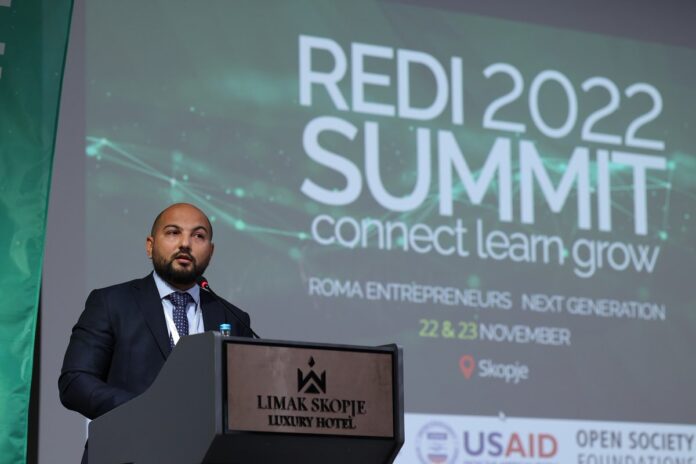
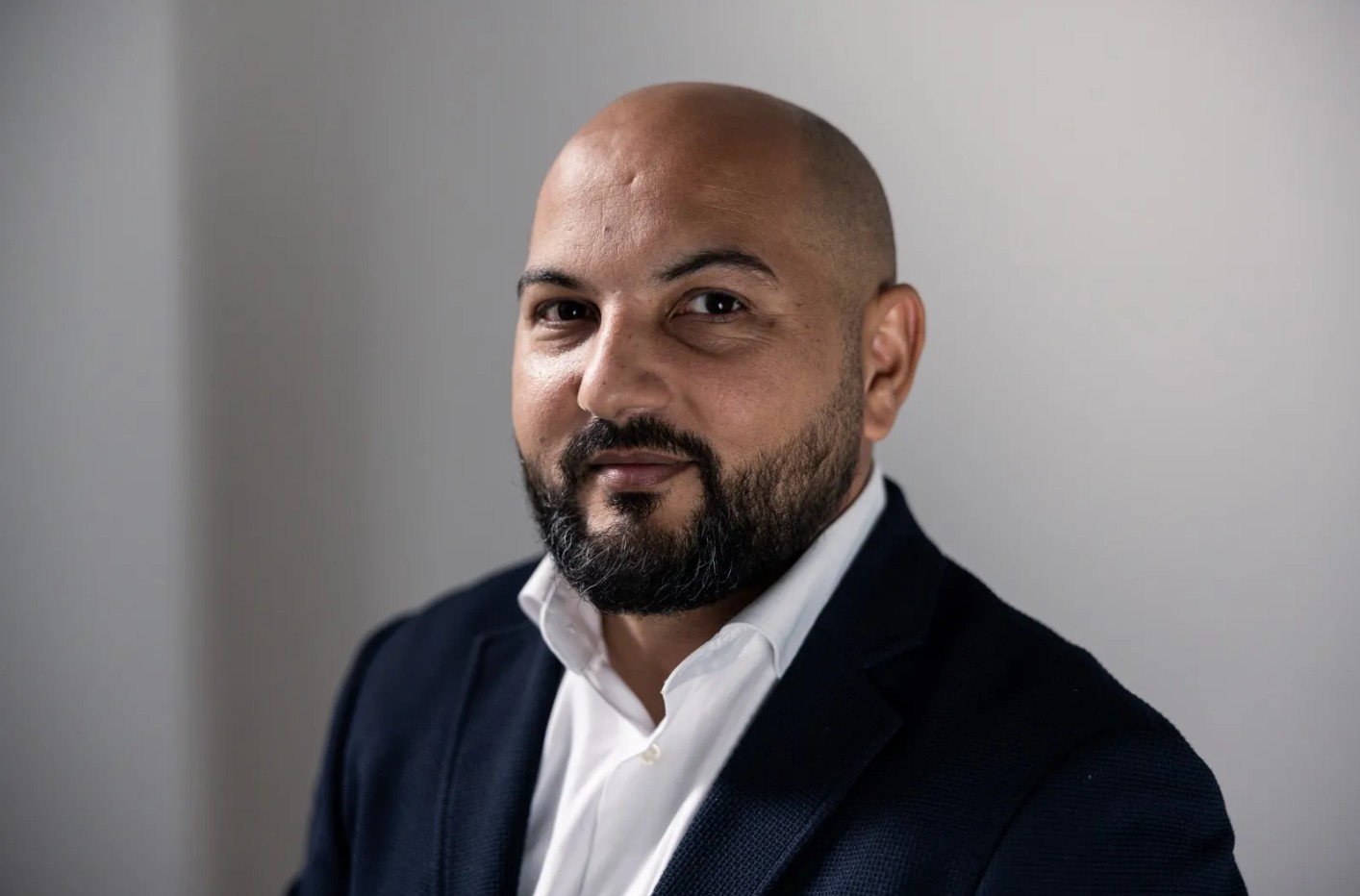
A €5 million financing programme aims to create more opportunities for Roma entrepreneurs and businesses connected to Roma communities in Albania. In this interview with Gazeta Diaspora Shqiptare, REDI founder Petrică Dulgheru explains how the loans will be distributed, who can apply, and what additional support beneficiaries will receive beyond financing. He also discusses the programme’s experience in North Macedonia and its plans for implementation in Albania, where the first loans are expected to be issued in early 2027.
Let’s start with the obvious question. How will the programme work in Albania, and when can people apply?
The €5 million is a loan from the Council of Europe Development Bank to the REDI Fund, covering Albania, Kosovo, Moldova and Romania. We do not lend to entrepreneurs directly. We lend to local microfinance institutions, and they lend to Roma entrepreneurs and to businesses linked to Roma communities. So an entrepreneur in Albania will deal with an Albanian lender, in Albanian, close to home.
In Albania we are not starting from zero. We already work with Fondi Besa, and we are finalising deal with a second partner institution. The lending runs through 2028. First loans under the new facility are expected in early 2027; entrepreneurs can already approach our partner and the REDI team in Tirana today.
Who is eligible, and how do you verify the connection to the Roma community?
Two groups. First, Roma-owned businesses, which will receive at least 40% of the financing. Second, micro and small enterprises with a direct link to Roma communities, for example those that employ Roma staff.
On verification, we keep it simple and respectful. Ethnicity is self-declared; nobody is asked for a certificate to prove they are Roma. For businesses that employ Roma, the lender looks at who works there. Our local team and the Roma loan officers we train inside partner institutions know the communities, and that knowledge is a better check than any form.
What are the specific eligibility criteria for a business to receive financing? Does the business need to be formally registered and operating for a certain period of time, or will new entrepreneurs who want to start or formalise a business also be eligible?
The loans are for real economic activity: a business, a farm, a self-employed person with income that can repay. Our partners can finance both existing businesses and start-ups, but each institution applies its own rules on registration and track record.]
Many Roma entrepreneurs work informally, and I do not see that as a reason to close the door. We want formalisation to be a result of our support, not a precondition for it. If someone has a working activity but no papers, our team helps them register and prepare, so they can become eligible.
How much can someone receive, and for what?
We expect the average loan to be around €7,000. In practice loans range from about €2,500 to €25,000, depending on the business and its capacity to repay.
The money is for productive use: equipment, tools, a vehicle, livestock, a greenhouse, stock for a shop, renovation of a workspace, working capital. In Albania I expect a lot of small farming, family retail, recycling, crafts, construction and services. It is not for consumption. It is for something that brings income and helps the entreprenreus grow their business rather than be trapped by debt which is a big risk in roma communities.
Where will entrepreneurs apply, and who will make the final decision on whether a loan is approved? Which financial or microfinance institutions will participate in Albania, and what role will REDI play in the selection and approval process?
They apply at the partner microfinance institution, at its branches. The credit decision belongs to that institution. It is a regulated lender, it carries the risk, and it knows how to assess a loan.
REDI does not approve or reject anyone. Our role is before and around that decision: we find entrepreneurs, help them prepare the application, and train and place Roma loan officers inside the lenders. The REDI Fund selects the partner institutions and monitors that the money reaches the people it is meant for.
 Will collateral be required? What about a good entrepreneur with no assets?
This is exactly the problem we were created to solve. Many Roma families do not have land titles or property papers, so a classic bank says no even to a good business.
Our model is built so that lack of collateral alone does not exclude a viable entrepreneur. The CEB loan is backed by a guarantee from its Social Impact Account, and that shared risk allows lenders to look at the business and its cash flow rather than at property. Depending on the loan, the lender may still ask for a personal guarantor or a pledge on the equipment purchased. And our experience is clear: Roma borrowers repay like any other client.
How will the non-financial support work, and is it free?
Yes, it is free for the entrepreneur. It is paid from our grant funding, mainly the European Union.
Our team in Tirana works with entrepreneurs one to one: understanding the business, basic financial planning, preparing the documents, and going with them to the lender if needed. After the loan we stay close, with advice on managing the business. We also run group training on financial literacy.] It is not a classroom programme you must complete before applying. It is practical help, when you need it.
What did you learn in North Macedonia, and what would you avoid?
North Macedonia was where we started, with Horizonti, and it proved the model. Three lessons.
First, trust decides everything. Money was available, but people came only when someone from their own community, a Roma loan officer, sat on the other side of the table. We will invest in that in Albania from the first day.
Second, support must target the real barrier. We sometimes offered general training that neither the lenders nor the entrepreneurs needed. What worked was concrete help with the application and with formalisation.
Third, it takes time. Lenders need to adapt their products and their mindset, and the first year is slow. I would rather grow carefully with good loans than fast with bad ones.
How will you reach the 30% target for women?
So far we have done better than that: about half of our loans across the portfolio went to women, and in North Macedonia much more. So the target is realistic.
It does not happen by itself. We go to women where they are, through women in our local team and Roma women loan officers. We accept smaller loans for home-based and family activities, where many women start. And we make sure that when the woman runs the business, the loan is in her name. In Albania we will work with Roma women’s organisations to reach those who would never walk into a financial institution alone.
What does success look like, and what should an entrepreneur do today?
Across the four countries, we expect the programme to unlock more than €8 million in microloans, support over 1,000 businesses and create or maintain more than 2,000 jobs. For Albania, I would like to see several hundred of those businesses. Real success for me is something more: that Albanian lenders see Roma entrepreneurs as normal, good clients, and continue to serve them long after this programme ends.
To an entrepreneur reading this: do not wait. Contact REDI in Albania @ [email protected], or go to Fondi Besa and say you are interested in the REDI financing. Bring your idea and what you already do. We will help you with the rest.
